Managing a university sports league involves a lot of moving parts. Hundreds of athletes across multiple disciplines. Dozens of teams competing in parallel tournaments. Schedules that shift when games run late or fields become unavailable. Most leagues handle this with spreadsheets, group chats, and a lot of manual coordination.
The Liga Deportiva Universitaria de Caracas faced this exact problem. Administrators spent hours updating records by hand. Coaches struggled to find accurate rosters. Athletes had no reliable way to check their upcoming matches. Information lived in scattered documents that quickly fell out of sync.
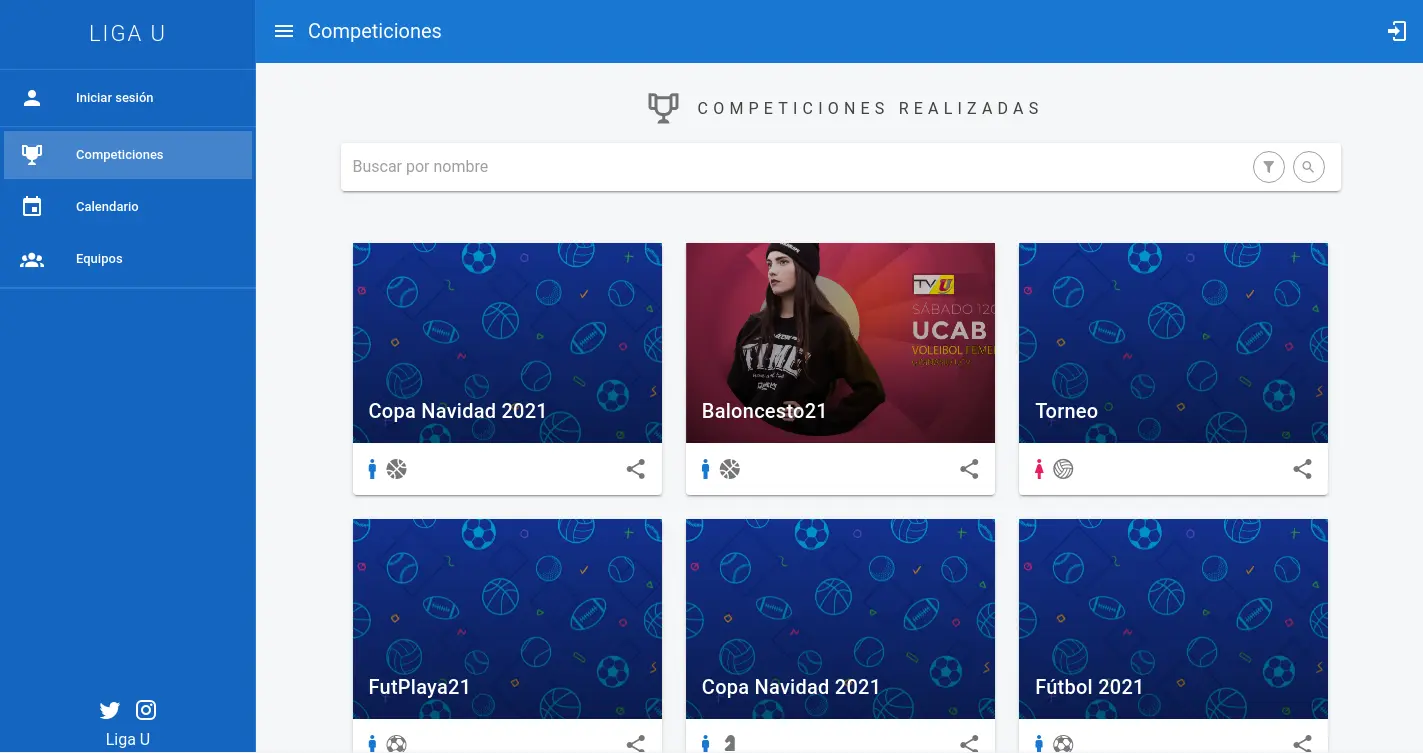
I built Liga U to fix this. A transaction-processing system designed specifically for sports league management.
What Liga U Does
Liga U handles three main domains: athletes, competitions, and matches.
For athletes, the system tracks registration, team assignments, eligibility status, and participation history. Administrators can enroll new athletes, transfer them between teams, and mark them active or inactive for specific seasons.
Competitions represent organized tournaments with defined rules. Each competition has its own format, schedule, and participating teams. The system supports different tournament structures like round-robin, single elimination, and group stages.
Matches are the individual games within a competition. Each match links two teams, tracks scores, records the venue and time, and stores the final result. The system maintains the full history of every match played.
The OLTP Architecture
OLTP stands for Online Transaction Processing. It describes systems designed for high-volume, data-intensive operations where consistency matters. Banking systems are the classic example. Sports league management has similar requirements.
When a match result gets recorded, several things need to happen together. The score updates. Team standings recalculate. Player statistics adjust. If any of these steps fails, the data becomes inconsistent. The system needs to treat these operations as a single atomic unit.
I built the backend with NestJS, a TypeScript framework that brings structure to Node.js applications. NestJS uses dependency injection and modules to keep code organized. This made it easy to separate concerns between athlete management, competition logic, and match processing.
The database layer used transactions to guarantee consistency. When multiple records needed to update together, they either all succeeded or all rolled back. No partial states. No orphaned records.
Competition Management
Designing the competition module required thinking through many edge cases. What happens when a team withdraws mid-tournament? How do you handle ties in standings? What if a match gets postponed?
I modeled competitions as state machines. A competition moves through phases: registration, active, completed. Each phase has rules about what operations are allowed. You cannot add teams to an active competition. You cannot record results for a completed one.
The scheduling system needed flexibility. Administrators could set proposed dates and venues for matches. They could also mark matches as postponed or cancelled. The system tracked both the planned schedule and what actually happened.
Standings calculations ran automatically when match results changed. The algorithm considered wins, losses, ties, and tiebreaker rules specific to each sport. Different competitions could use different point systems.
Athlete Tracking
Athletes belonged to teams, and teams belonged to competitions. This hierarchy created interesting data modeling challenges.
An athlete might play for different teams in different sports. A basketball player could also be on the volleyball team. Each participation was tracked separately. This let the system answer questions like “How many competitions has this athlete participated in?” or “What is this athlete’s record in basketball specifically?”
Eligibility rules added another layer. Some competitions required athletes to maintain academic standing. Others had age restrictions. The system stored eligibility criteria and flagged athletes who did not meet requirements.
Transfer logic handled athletes moving between teams. The system kept a history of every team assignment. This mattered for statistics and for resolving disputes about which team an athlete represented in past matches.
The Frontend
The user interface used React with Next.js. Different users needed different views.
Administrators saw dashboards with pending tasks. New athlete registrations to approve. Matches awaiting results. Competitions that needed scheduling. The interface prioritized the most urgent items.
Coaches accessed their team rosters and upcoming schedules. They could view opponent information and past match results. Read-only access kept them informed without risking accidental changes.
Athletes had a simpler view. Their schedule, their team, their personal statistics. A mobile-friendly layout let them check information from anywhere.
Data Integrity Challenges
Sports data has more edge cases than you might expect. A match might go to overtime. A result might get appealed and overturned. A team might forfeit. An athlete might get suspended mid-competition.
Each scenario required careful handling. Overturned results needed to recalculate standings without losing the history of what originally happened. Forfeits needed to distinguish between no-shows and disqualifications. Suspensions needed to propagate to eligibility checks.
I implemented audit logging for all changes. Every update stored who made it, when, and what the previous value was. This created a complete history that administrators could review when questions arose.
Performance Considerations
League data grew over time. Multiple seasons of competitions, thousands of matches, hundreds of athletes. Queries needed to stay fast even as tables got larger.
Database indexes covered the common query patterns. Looking up an athlete’s matches. Filtering competitions by status. Sorting standings by points. The schema design anticipated these access patterns from the start.
Caching helped for expensive calculations. Standings did not need to recalculate on every page load. The system cached results and invalidated them only when underlying data changed.
What I Learned
Building Liga U taught me how domain complexity drives technical decisions. The business rules for sports leagues seem simple until you start implementing them. Then you discover the dozens of special cases that real-world operations require.
Transaction management became second nature. I learned to think about what happens when operations fail partway through. Database transactions provided the safety net, but the code had to be structured to use them correctly.
The project also reinforced the value of typed languages for complex domains. TypeScript caught many errors at compile time. The type system documented relationships between entities better than comments ever could.